Maternal Depression

banner with a dark purple background featuring the title 'Safe Sleep' in white and the tagline 'Alone, on their back, in a crib — every sleep, every time' in teal. A circular photo shows a Black infant sleeping peacefully. The Summit County Public Health logo appears in the top left corner with teal accent borders.

The Maternal Depression Network is a collaboration of counseling providers and parenting support groups working to connect families to mental health resources and normalize postpartum depression.

Communities thrive when families are living happy, healthy lives, and that often starts at home.

You Are Not Alone

Maternal depression affects 20% of parents in Summit County, making it the most common complication of childbirth.

With Help, You Can Be Well

Maternal Depression and Perinatal Mood and Anxiety Disorders are treatable.

Watch a helpful video about maternal depression

Maternal Depression Is More Than "Baby Blues"

Maternal depression lasts longer than the "baby blues." If your symptoms have lasted longer than 2 to 3 weeks, you should be screened for Maternal Depression, also known as Perinatal Mood and Anxiety Disorders.

Protect Yourself

Knowing the risks and symptoms can help protect you and are a vital part of the healing process.

Risk Factors of Maternal Depression

  • Young or older parental age
  • Birth complications
  • Personal or family history of depression
  • Living in urban areas
  • Low income
  • Isolation or lack of social support
  • Stress
  • Education level
  • Marital status
  • Interpersonal violence

Symptoms of Maternal Depression

  • Mood swings
  • Anxiety
  • Feelings of hopelessness
  • Fatigue and loss of energy
  • Restlessness
  • Difficulty concentrating
  • Thoughts of hurting yourself or your children

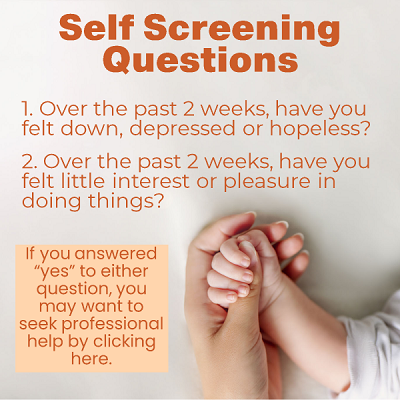
 self screening questions. 1. over the past 2 weeks have you felt down, depressed or hopeless? 2. over the past 2 weeks have you felt little interest or pleasure in doing things? If you answered yes to health you may want to seek professional help.

Find Help

For more information, call 330-926-5700 or email mdn@schd.org.


Page Updated: June 9, 2026